
Mejora de películas delgadas conductoras y transparentes de nanocables de plata mediante tratamientos mecánicos y térmicos

Palabras clave:
Nanohilos de plata, electrodos transparentes, recocido térmico, prensado mecánico, ITOBarra lateral del artículo
Contenido principal del artículo
Introducción: El ITO es ampliamente usado en electrodos transparentes, pero su fragilidad y la escasez de indio limitan aplicaciones flexibles. Las películas de nanohilos de plata (AgNW) ofrecen una alternativa prometedora por su alta conductividad y flexibilidad mecánica.
Objetivo: Se evaluaron el recocido térmico y el prensado mecánico como tratamientos post-deposición para mejorar las propiedades eléctricas y ópticas de películas de AgNW.
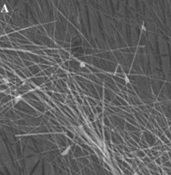
Métodología: Se depositaron películas de AgNW sobre sustratos de vidrio y PET por spin-coating y se trataron térmicamente (130–225 °C) o mecánicamente (2–10 tnf). Se emplearon mediciones de cuatro puntas, espectroscopía UV–Vis y SEM.
Resultados: Las películas iniciales presentaron resistencias de hoja inferiores a 30 Ω/sq y transmitancias cercanas al 75 % a 530 nm. El recocido a 165 °C durante 22,5 min redujo la resistencia en (50 ± 3) % sin pérdidas ópticas significativas. El prensado a 4 tnf durante 20 s logró una reducción de (76 ± 2) %, aunque la transmitancia disminuyó ~9 puntos porcentuales por densificación.
Conclusiones: Ambos tratamientos mejoran efectivamente el desempeño eléctrico de las redes de AgNW, posicionándolas como sustitutos viables del ITO en electrodos transparentes flexibles.
1. Patel, J., Sharma, R. K., Quijada, M. A., & Rana, M. M. (2024). A review of transparent conducting films (TCFs): Prospective ITO and AZO deposition methods and applications. Nanomaterials, 14(24), 2013.
https://doi.org/10.3390/nano14242013 DOI: https://doi.org/10.3390/nano14242013
2. Sharma, N., Nair, N. M., Nagasarvari, G., Ray, D., & Swaminathan, P. A review of silver nanowire-based composites for flexible electronic applications. Flexible and Printed Electronics, (2022) 7(1), 014009. DOI: https://doi.org/10.1088/2058-8585/ac5214
https://doi.org/10.1088/2058-8585/ac4b7d
3. Chavan, G. T., Kim, Y., Khokhar, M. Q., Hussain, S. Q., Cho, E. C., Yi, J., & Jeon, C. W. A brief review of transparent conducting oxides (TCO): The influence of different deposition techniques on the efficiency of solar cells. Nanomaterials, (2023)13,(7), 1226.
https://doi.org/10.3390/nano13071226 DOI: https://doi.org/10.3390/nano13071226
4. Afre, R., Sharma, N., Sharon, M., & Sharon, M. Transparent conducting oxide films for various applications: A review. Reviews on Advanced Materials Science, (2018), 53(1), 79–89.
https://doi.org/10.1515/rams-2018-0006 DOI: https://doi.org/10.1515/rams-2018-0006
5. Pasquarelli, R. M., Ginley, D. S., & O’Hayre, R. Solution processing of transparent conductors: From flask to film. Chemical Society Reviews, (2011) 40(11), 5406–5441. DOI: https://doi.org/10.1039/c1cs15065k
https://doi.org/10.1039/c1cs15031e
6. Ma, J. H., Kim, M. G., Jeong, J. H., Park, M. H., Ha, H. J., Kang, S. J., & Kang, S. J. Highly efficient ITO-free quantum-dot light emitting diodes via solution-processed PEDOT:PSS semitransparent electrode. Materials, (2023) 16(11), 4053. DOI: https://doi.org/10.3390/ma16114053
https://doi.org/10.3390/ma1611405
7. Zhang, J., Chen, Z., Xu, X., Liao, W., & Yang, L. A simple and efficient approach to fabricate graphene/CNT hybrid transparent conductive films. RSC Advances, (2017) 7(83), 52555–52560. DOI: https://doi.org/10.1039/C7RA09809J
https://doi.org/10.1039/c7ra10225h
8. Rosli, N. N., Ibrahim, M. A., Ludin, N. A., Teridi, M. A. M., & Sopian, K. A review of graphene-based transparent conducting films for use in solar photovoltaic applications. Renewable and Sustainable Energy Reviews, (2019) 99, 83–99. DOI: https://doi.org/10.1016/j.rser.2018.09.011
https://doi.org/10.1016/j.rser.2018.09.020 DOI: https://doi.org/10.1016/j.rser.2018.09.020
9. Siwal, S. S., Saini, A. K., Rarotra, S., Zhang, Q., & Thakur, V. K. Advancements in transparent carbon nanotube films: Chemistry and imminent challenges. Journal of Nanostructure in Chemistry, (2021) 11(1), 93–130. DOI: https://doi.org/10.1007/s40097-020-00378-2
https://doi.org/10.1007/s40097-020-00374-5
10. Tan, D., Jiang, C., Li, Q., Bi, S., & Song, J. Silver nanowire networks: Preparation and applications. Journal of Materials Science: Materials in Electronics, (2020) 31(18), 15669–15696. DOI: https://doi.org/10.1007/s10854-020-04131-x
https://doi.org/10.1007/s10854-020-04171-0
11. Tokuno, T., Nogi, M., Karakawa, M., Jiu, J., Nge, T. T., Aso, Y., & Suganuma, K. . Fabrication of silver nanowire transparent electrodes at room temperature. Nano Research, (2011) 4(12), 1215–1222. DOI: https://doi.org/10.1007/s12274-011-0172-3
https://doi.org/10.1007/s12274-011-0162-6
12. Li, W., Zhang, H., Shi, S., Xu, J., Qin, X., He, Q., & Fahlman, M. Recent progress in silver nanowire networks for flexible organic electronics. Journal of Materials Chemistry C, (2020) 8(14), 4636–4674. DOI: https://doi.org/10.1039/C9TC06865A
https://doi.org/10.1039/c9tc05891a
13. Dinh, D. A., Hui, K. N., Hui, K. S., Kumar, P., & Singh, J. Silver nanowires: A promising transparent conducting electrode material for optoelectronic and electronic applications. Reviews in Advanced Sciences and Engineering, (2013) 2(4), 324–345. DOI: https://doi.org/10.1166/rase.2013.1048
https://doi.org/10.1166/rase.2013.1050
14. Wang, H., Wang, Y., & Chen, X. Synthesis of uniform silver nanowires from AgCl seeds for transparent conductive films via spin-coating at variable spin-speed. Colloids and Surfaces A: Physicochemical and Engineering Aspects, (2019) 565, 154–161. DOI: https://doi.org/10.1016/j.colsurfa.2018.11.050
https://doi.org/10.1016/j.colsurfa.2018.12.063
15. Hu, L., Kim, H. S., Lee, J. Y., Peumans, P., & Cui, Y. Scalable coating and properties of transparent, flexible, silver nanowire electrodes. ACS Nano, (2010) 4(5), 2955–2963.
https://doi.org/10.1021/nn1005232 DOI: https://doi.org/10.1021/nn1005232
16. Khaligh, H. H. Silver nanowire transparent electrodes: Fabrication, characterization, and device integration (Doctoral dissertation, University of Waterloo). (2013)
17. Meena, J. S., Choi, S. B., Jung, S. B., & Kim, J. W. Advances in silver nanowire-based composite electrodes: Materials processing, fabrication, and applications. Advanced Materials Technologies, (2023) 8(19), 2300602.
https://doi.org/10.1002/admt.202300602 DOI: https://doi.org/10.1002/admt.202300602
18. Lam, K. K., Ng, S. M., Wong, H. F., Fei, L., Liu, Y., Chan, K. H., & Mak, C. L. Effect of thickness on the optical and electrical properties of ITO/Au/ITO sandwich structures. ACS Applied Materials & Interfaces, (2020) 12(11), 13437–13446. DOI: https://doi.org/10.1021/acsami.9b20203
https://doi.org/10.1021/acsami.9b22108
19. Wang, S., Liu, H., Pan, Y., Xie, F., Zhang, Y., Zhao, J., & Gao, F. Performance enhancement of silver nanowire-based transparent electrodes by ultraviolet irradiation. Nanomaterials, (2022) 12(17), 2956.
https://doi.org/10.3390/nano12172956 DOI: https://doi.org/10.3390/nano12172956
20. Wang, J., Fan, J., Wan, T., Hu, L., Li, Z., & Chu, D. Recent progress in silver nanowire-based transparent conductive electrodes. Advanced Energy and Sustainability Research, (2025). 6(9), 2500033.
https://doi.org/10.1002/aesr.202500033 DOI: https://doi.org/10.1002/aesr.202500033
21. Li, J., Luo, J., & Liu, Y. Recent advances in silver nanowire-based transparent conductive films: From synthesis to applications. Coatings, (2025) 15(7), 858.
https://doi.org/10.3390/coatings15070858 DOI: https://doi.org/10.3390/coatings15070858
22. Song, T. B., Chen, Y., Chung, C. H., Yang, Y., Bob, B., Duan, H. S., Li, G., Tu, N. G., Huang, Y., & Yang, Y. Nanoscale joule heating and electromigration enhanced ripening of silver nanowire contacts. ACS Nano, (2014) 8(3), 2804–2811. DOI: https://doi.org/10.1021/nn4065567
https://doi.org/10.1021/nn406405s
23. Azani, M. R., Hassanpour, A., & Torres, T. Benefits, problems, and solutions of silver nanowire transparent conductive electrodes in indium tin oxide (ITO)-free flexible solar cells. Advanced Energy Materials, (2020) 10(48), 2002536.
https://doi.org/10.1002/aenm.202002536 DOI: https://doi.org/10.1002/aenm.202002536
24. Ding, Y., Cui, Y., Liu, X., Liu, G., & Shan, F. Welded silver nanowire networks as high-performance transparent conductive electrodes: Welding techniques and device applications. Applied Materials Today, (2020) 20, 100634.
https://doi.org/10.1016/j.apmt.2020.100634 DOI: https://doi.org/10.1016/j.apmt.2020.100634
25. Im, H. G., Jang, J., Jeon, Y., Noh, J., Jin, J., Lee, J. Y., & Bae, B. S. Flexible transparent crystalline-ITO/Ag nanowire hybrid electrode with high stability for organic optoelectronics. ACS Applied Materials & Interfaces,(2020).12(50), 56462–56469. DOI: https://doi.org/10.1021/acsami.0c17130
https://doi.org/10.1021/acsami.0c16572
26. Hu, Y., Zhang, X., Ding, H., & Hu, Y. Laser shock-enabled optical–thermal–mechanical coupled welding method for silver nanowires. International Journal of Machine Tools and Manufacture, (2024) 199, 104162.
https://doi.org/10.1016/j.ijmachtools.2024.104162. DOI: https://doi.org/10.1016/j.ijmachtools.2024.104162
27. Bian, M., Qian, Y., Cao, H., Huang, T., Ren, Z., Dai, X., Zhao, W., Li, J., & Yin, S. Chemically welding silver nanowires toward transferable and flexible transparent electrodes in heaters and double-sided perovskite solar cells. ACS Applied Materials & Interfaces, (2023) 15 (10), 13307–13318. DOI: https://doi.org/10.1021/acsami.2c21996
https://doi.org/10.1021/acsami.2c22864
28. Garnett, E. C., Cai, W., Cha, J. J., Mahmood, F., Connor, S. T., Greyson Christoforo, M., Cui, Y., McGehee, M. D., & Brongersma, M. L. Self-limited plasmonic welding of silver nanowire junctions. Nature Materials, (2012), 11(3), 241–249.
https://doi.org/10.1038/nmat3238 DOI: https://doi.org/10.1038/nmat3238
29. Sekkat, A., Sanchez-Velasquez, C., Bardet, L., Weber, M., Jiménez, C., Bellet, D., Muñoz-Rojas, D., & Nguyen, V. H. Towards enhanced transparent conductive nanocomposites based on metallic nanowire networks coated with metal oxides: A brief review. Journal of Materials Chemistry A, (2024). 12(38), 25600–25621.
https://doi.org/10.1039/D4TA05370B DOI: https://doi.org/10.1039/D4TA05370B
##plugins.themes.bootstrap3.displayStats.downloads##

Esta obra está bajo una licencia internacional Creative Commons Atribución-NoComercial-CompartirIgual 4.0.
Los autores que publican en esta revista están de acuerdo con los siguientes términos:
Los autores ceden los derechos patrimoniales a la revista y a la Universidad del Valle sobre los manuscritos aceptados, pero podrán hacer los reusos que consideren pertinentes por motivos profesionales, educativos, académicos o científicos, de acuerdo con los términos de la licencia que otorga la revista a todos sus artículos.
Los artículos serán publicados bajo la licencia Creative Commons 4.0 BY-NC-SA (de atribución, no comercial, sin obras derivadas).