
Estrategias de Bioremediación para tratamiento de Contaminantes Emergentes: una visión desde la Fito-remediación

Palabras clave:
Contaminantes Emergentes (CE), Humedales Construidos (HC), Fitorremediación de Aguas Residuales, Plantas de Tratamiento de Aguas Residuales, Mecanismos y Eliminación de ContaminantesBarra lateral del artículo
Contenido principal del artículo
Introducción: Los contaminantes emergentes (CEs) son una amplia y creciente categoría de sustancias encontradas en el ambiente que solo recién se reconoce como significativos contaminantes del agua. La inhabilidad de las plantas de tratamiento de aguas residuales (PTAR) para remover efectivamente CEs hace necesarios métodos de tratamientos alternativos y ambientalmente amigables.
Objetivo: El objetivo de la revisión es explorar estrategias de bioremediación para contaminantes emergentes usando humedales construidos y el papel de las plantas en la fitoremediación de aguas servidas.
Metodología: Considero una revisión bibliográfica usando las bases de datos electrónicas de la biblioteca de la Universidad del Valle, específicamente SCOPUS y ScienceDirect (Elsevier). La búsqueda usó palabras claves como “Contaminantes Emergentes”, “Humedales Construidos” y de “Plantas Tropicales en Fitoremediación” y se priorizaron las publicaciones de los últimos 3 años.
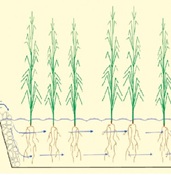
Resultados: La remoción de CEs en HCs involucra complejos procesos físicos, químicos y biológicos, los que son influenciados por el diseño y parámetros operacionales del sistema. Los HC varían significativamente en diseño, con las configuraciones que incluyen sistemas de flujo superficial (FS) y subsuperficial (FSS), así como flujo horizontal (FHSS) y vertical (FVSS). Las configuraciones difieren en tipo de medio, profundidad y en la eficiencia del tratamiento.
Conclusiones: Esta revisión examina la presencia de CEs en ambientes acuáticos y explora el uso de las plantas en HC como estrategias de fitorremediación. Los hallazgos indican que los HCs son una alternativa sostenible y efectiva con mecanismos de remoción claves -incluyendo biodegradación, adsorción de sustrato y ingreso de macrofita- jugando un papel crucial en eliminar CEs recalcitrantes. El diseño y condiciones operacionales de los HCs impactan significativamente la eficiencia de fitorremediacion.
Rathi BS, Kumar PS, Show P-L. A review on effective removal of emerging contaminants from aquatic systems: Current trends and scope for further research. J Hazard Mater. 2021; 409 (124413):124413. Disponible en: http://dx.doi.org/10.1016/j.jhazmat.2020.124413 DOI: https://doi.org/10.1016/j.jhazmat.2020.124413
Khan S, Naushad M, Govarthanan M, Iqbal J, Alfadul SM. Emerging contaminants of high concern for the environment: Current trends and future research. Environ Res. 2022; 207 (112609):112609. Disponible en: http://dx.doi.org/10.1016/j.envres.2021.112609 DOI: https://doi.org/10.1016/j.envres.2021.112609
Pal A, Gin KY-H, Lin AY-C, Reinhard M. Impacts of emerging organic contaminants on freshwater resources: review of recent occurrences, sources, fate and effects. Sci Total Environ. 2010; 408 (24): 6062–9. Disponible en: http://dx.doi.org/10.1016/j.scitotenv.2010.09.026 DOI: https://doi.org/10.1016/j.scitotenv.2010.09.026
Goutam Mukherjee A, Ramesh Wanjari U, Eladl MA, El-Sherbiny M, Elsherbini DMA, Sukumar A, et al. Mixed contaminants: Occurrence, interactions, toxicity, detection, and remediation. Molecules. 2022; 27 (8):2577. Disponible en: http://dx.doi.org/10.3390/molecules27082577 DOI: https://doi.org/10.3390/molecules27082577
Zhang Q, Xu H, Song N, Liu S, Wang Y, Ye F, et al. New insight into fate and transport of organic compounds from pollution sources to aquatic environment using non-targeted screening: A wastewater treatment plant case study. Sci Total Environ. 2023; 863 (161031):161031. Disponible en: http://dx.doi.org/10.1016/j.scitotenv.2022.161031 DOI: https://doi.org/10.1016/j.scitotenv.2022.161031
Sharma R, Malaviya P. Constructed wetlands for textile wastewater remediation: A review on concept, pollutant removal mechanisms, and integrated technologies for efficiency enhancement. Chemosphere. 2022; 290 (133358):133358. Disponible en: http://dx.doi.org/10.1016/j.chemosphere.2021.133358 DOI: https://doi.org/10.1016/j.chemosphere.2021.133358
Llorca M, Farré M, Eljarrat E, Díaz-Cruz S, Rodríguez-Mozaz S, Wunderlin D, et l. Review of emerging contaminants in aquatic biota from Latin America: 2002-2016. Environ Toxicol Chem. 2017; 36 (7):1716–27. Disponible en: http://dx.doi.org/10.1002/etc.3626 DOI: https://doi.org/10.1002/etc.3626
Peña-Guzmán C, Ulloa-Sánchez S, Mora K, Helena-Bustos R, Lopez-Barrera E, Alvarez J, et al. Emerging pollutants in the urban water cycle in Latin America: A review of the current literature. J Environ Manage. 2019; 237:408–23. Disponible en: http://dx.doi.org/10.1016/j.jenvman.2019.02.100 DOI: https://doi.org/10.1016/j.jenvman.2019.02.100
Souza MCO, Rocha BA, Adeyemi JA, Nadal M, Domingo JL, Barbosa F Jr. Legacy and emerging pollutants in Latin America: A critical review of occurrence and levels in environmental and food samples. Sci Total Environ. 2022; 848 (157774):157774. Disponible en: http://dx.doi.org/10.1016/j.scitotenv.2022.157774 DOI: https://doi.org/10.1016/j.scitotenv.2022.157774
Okoye CO, Okeke ES, Okoye KC, Echude D, Andong FA, Chukwudozie KI, et al. Occurrence and fate of pharmaceuticals, personal care products (PPCPs) and pesticides in African water systems: A need for timely intervention. Heliyon. 2022; 8 (3):e09143. Disponible en: http://dx.doi.org/10.1016/j.heliyon.2022.e09143 DOI: https://doi.org/10.1016/j.heliyon.2022.e09143
Shehu Z, Nyakairu GWA, Tebandeke E, Odume ON. Overview of African water resources contamination by contaminants of emerging concern. Sci Total Environ. 2022; 852 (158303):158303. Disponible en: http://dx.doi.org/10.1016/j.scitotenv.2022.158303 DOI: https://doi.org/10.1016/j.scitotenv.2022.158303
Yang Y, Ok YS, Kim K-H, Kwon EE, Tsang YF. Occurrences and removal of pharmaceuticals and personal care products (PPCPs) in drinking water and water/sewage treatment plants: A review. Sci Total Environ. 2017; 596–597:303–20. Disponible en: http://dx.doi.org/10.1016/j.scitotenv.2017.04.102 DOI: https://doi.org/10.1016/j.scitotenv.2017.04.102
Zhang D, Gersberg RM, Ng WJ, Tan SK. Removal of pharmaceuticals and personal care products in aquatic plant-based systems: a review. Environ Pollut. 2014; 184: 620–39. Disponible en: http://dx.doi.org/10.1016/j.envpol.2013.09.009 DOI: https://doi.org/10.1016/j.envpol.2013.09.009
Gorito AM, Ribeiro AR, Almeida CMR, Silva AMT. A review on the application of constructed wetlands for the removal of priority substances and contaminants of emerging concern listed in recently launched EU legislation. Environ Pollut. 2017; 227:428–43. Disponible en: http://dx.doi.org/10.1016/j.envpol.2017.04.060 DOI: https://doi.org/10.1016/j.envpol.2017.04.060
Wang Y, Cai Z, Sheng S, Pan F, Chen F, Fu J. Comprehensive evaluation of substrate materials for contaminants removal in constructed wetlands. Sci Total Environ. 2020; 701 (134736):134736. Disponible en: http://dx.doi.org/10.1016/j.scitotenv.2019.134736 DOI: https://doi.org/10.1016/j.scitotenv.2019.134736
Jiménez-Bambague EM, Madera-Parra CA, Ortiz-Escobar AC, Morales-Acosta PA, Peña-Salamanca EJ, Machuca-Martínez F. High-rate algal pond for removal of pharmaceutical compounds from urban domestic wastewater under tropical conditions. Case study: Santiago de Cali, Colombia. Water Sci Technol. 2020; 82 (6):1031–43. Disponible en: http://dx.doi.org/10.2166/wst.2020.362 DOI: https://doi.org/10.2166/wst.2020.362
Jiménez-Bambague EM, Madera-Parra CA, Rangel-Delgado MF. Photo-Fenton and Electro-Fenton Performance for the Removal of Pharmaceutical Compounds in Real urban wastewater, Electrochim. Electrochim Acta. 2023; 442, 141905. Disponible en: http://doi.org/10.1016/j.electacta.2023.141905 DOI: https://doi.org/10.1016/j.electacta.2023.141905
Jiménez-Bambague EM, Villarreal-Arias DS, Ramírez-Vanegas OD, Gómez-Gómez DD, Madera-Parra CA, Peña-Salamanca EJ, et al. Removal of pharmaceutical compounds from real urban wastewater by a continuous bio-electrochemical process at pilot scale. J Environ Chem Eng. 2023; 11 (3):110130. Disponible en: http://dx.doi.org/10.1016/j.jece.2023.110130 DOI: https://doi.org/10.1016/j.jece.2023.110130
Jiménez-Bambague EM, Florez-Castillo JS, Gómez-Angulo RD, Morales-Acosta PA, Peña-Salamanca EJ, Machuca-Martínez F, et al. Cell growth and removal capacity of ibuprofen and diclofenac by Parachlorella kessleri at bench scale. J Chem Technol Biotechnol. 2022; 97 (6):1416–23. Disponible en: http://dx.doi.org/10.1002/jctb.6911 DOI: https://doi.org/10.1002/jctb.6911
Rodriguez-Narvaez OM, Peralta-Hernandez JM, Goonetilleke A, Bandala ER. Treatment technologies for emerging contaminants in water: A review. Chem Eng J. 2017; 323:361–80. Disponible en: http://dx.doi.org/10.1016/j.cej.2017.04.106 DOI: https://doi.org/10.1016/j.cej.2017.04.106
Bilal M, Adeel M, Rasheed T, Zhao Y, Iqbal HMN. Emerging contaminants of high concern and their enzyme-assisted biodegradation - A review. Environ Int. 2019; 124:336–53. Disponible en: http://dx.doi.org/10.1016/j.envint.2019.01.011 DOI: https://doi.org/10.1016/j.envint.2019.01.011
Petrie B, Barden R, Kasprzyk-Hordern B. A review on emerging contaminants in wastewaters and the environment: current knowledge, understudied areas and recommendations for future monitoring. Water Res. 2015; 72:3–27. Disponible en: http://dx.doi.org/10.1016/j.watres.2014.08.053 DOI: https://doi.org/10.1016/j.watres.2014.08.053
Couto E, Assemany PP, Assis Carneiro GC, Ferreira Soares DC. The potential of algae and aquatic macrophytes in the pharmaceutical and personal care products (PPCPs) environmental removal: a review. Chemosphere. 2022; 302 (134808):134808. Disponible en: http://dx.doi.org/10.1016/j.chemosphere.2022.134808 DOI: https://doi.org/10.1016/j.chemosphere.2022.134808
Patel M, Kumar R, Kishor K, Mlsna T, Pittman CU Jr, Mohan D. Pharmaceuticals of emerging concern in aquatic systems: Chemistry, occurrence, effects, and removal methods. Chem Rev. 2019; 119 (6):3510–673. Disponible en: http://dx.doi.org/10.1021/acs.chemrev.8b00299 DOI: https://doi.org/10.1021/acs.chemrev.8b00299
AL Falahi OA, Abdullah SRS, Hasan HA, Othman AR, Ewadh HM, Kurniawan SB, et al. Occurrence of pharmaceuticals and personal care products in domestic wastewater, available treatment technologies, and potential treatment using constructed wetland: A review. Process Saf Environ Prot. 2022; 168:1067–88. Disponible en: http://dx.doi.org/10.1016/j.psep.2022.10.082 DOI: https://doi.org/10.1016/j.psep.2022.10.082
Kumar M, Sridharan S, Sawarkar AD, Shakeel A, Anerao P, Mannina G, et al. Current research trends on emerging contaminants pharmaceutical and personal care products (PPCPs): A comprehensive review. Sci Total Environ. 2023; 859 (Pt 1):160031. Disponible en: http://dx.doi.org/10.1016/j.scitotenv.2022.160031 DOI: https://doi.org/10.1016/j.scitotenv.2022.160031
Hawash HB, Moneer AA, Galhoum AA, Elgarahy AM, Mohamed WAA, Samy M, et al. Occurrence and spatial distribution of pharmaceuticals and personal care products (PPCPs) in the aquatic environment, their characteristics, and adopted legislations. J Water Proc.engineering. 2023; 52 (103490):103490. Disponible en: http://dx.doi.org/10.1016/j.jwpe.2023.103490 DOI: https://doi.org/10.1016/j.jwpe.2023.103490
Inter-American Development Bank (IDB)- A partner for Latin America and the Caribbean. 2018.
Diamanti-Kandarakis E, Bourguignon J-P, Giudice LC, Hauser R, Prins GS, Soto AM, et al. Endocrine-disrupting chemicals: an Endocrine Society scientific statement. Endocr Rev. 2009; 30 (4):293–342. Disponible en: http://dx.doi.org/10.1210/er.2009-0002 DOI: https://doi.org/10.1210/er.2009-0002
Kumar R, Qureshi M, Vishwakarma DK, Al-Ansari N, Kuriqi A, Elbeltagi A, et al. A review on emerging water contaminants and the application of sustainable removal technologies. Case Studies in Chemical and Environmental Engineering. 2022; 6 (100219):100219. Disponible en: http://dx.doi.org/10.1016/j.cscee.2022.100219 DOI: https://doi.org/10.1016/j.cscee.2022.100219
Vázquez-Tapia I, Salazar-Martínez T, Acosta-Castro M, Meléndez-Castolo KA, Mahlknecht J, Cervantes-Avilés P, et al. Occurrence of emerging organic contaminants and endocrine disruptors in different water compartments in Mexico - A review. Chemosphere. 2022; 308 (Pt 1):136285. Disponible en: http://dx.doi.org/10.1016/j.chemosphere.2022.136285 DOI: https://doi.org/10.1016/j.chemosphere.2022.136285
Ulucan-Altuntas K, Manav-Demir N, Ilhan F, Gelgor HB, Huddersman K, Tiwary A, et al. Emerging pollutants removal in full-scale biological treatment plants: A case study. J Water Proc.engineering. 2023; 51 (103336):103336. Disponible en: http://dx.doi.org/10.1016/j.jwpe.2022.103336 DOI: https://doi.org/10.1016/j.jwpe.2022.103336
Kasonga TK, Coetzee MAA, Kamika I, Ngole-Jeme VM, Benteke Momba MN. Endocrine-disruptive chemicals as contaminants of emerging concern in wastewater and surface water: A review. J Environ Manage. 2021; 277 (111485):111485. Disponible en: http://dx.doi.org/10.1016/j.jenvman.2020.111485 DOI: https://doi.org/10.1016/j.jenvman.2020.111485
Phong Vo HN, Ngo HH, Guo W, Hong Nguyen TM, Li J, Liang H, et al. Poly‐and perfluoroalkyl substances in water and wastewater: A comprehensive review from sources to remediation. J Water Proc.engineering. 2020; 36 (101393):101393. Disponible en: http://dx.doi.org/10.1016/j.jwpe.2020.101393 DOI: https://doi.org/10.1016/j.jwpe.2020.101393
Adu O, Ma X, Sharma VK. Bioavailability, phytotoxicity and plant uptake of per-and polyfluoroalkyl substances (PFAS): A review. J Hazard Mater. 2023; 447 (130805):130805. Disponible en: http://dx.doi.org/10.1016/j.jhazmat.2023.130805 DOI: https://doi.org/10.1016/j.jhazmat.2023.130805
Qi Y, Cao H, Pan W, Wang C, Liang Y. The role of dissolved organic matter during Per- and Polyfluorinated Substance (PFAS) adsorption, degradation, and plant uptake: A review. J Hazard Mater. 2022; 436 (129139):129139. Disponible en: http://dx.doi.org/10.1016/j.jhazmat.2022.129139 DOI: https://doi.org/10.1016/j.jhazmat.2022.129139
Li J, Sun J, Li P. Exposure routes, bioaccumulation and toxic effects of per- and polyfluoroalkyl substances (PFASs) on plants: A critical review. Environ Int. 2022; 158 (106891):106891. Disponible en: http://dx.doi.org/10.1016/j.envint.2021.106891 DOI: https://doi.org/10.1016/j.envint.2021.106891
Kavusi E, Shahi Khalaf Ansar B, Ebrahimi S, Sharma R, Ghoreishi SS, Nobaharan K, et al. Critical review on phytoremediation of polyfluoroalkyl substances from environmental matrices: Need for global concern. Environ Res. 2023; 217 (114844):114844. Disponible en: http://dx.doi.org/10.1016/j.envres.2022.114844 DOI: https://doi.org/10.1016/j.envres.2022.114844
Tursi A, Baratta M, Easton T, Chatzisymeon E, Chidichimo F, De Biase M, et al. Microplastics in aquatic systems, a comprehensive review: origination, accumulation, impact, and removal technologies. RSC Adv. 2022 [citado el 3 de febrero de 2025];12 (44):28318–40. Disponible en: https://pubs.rsc.org/en/content/articlehtml/2022/ra/d2ra04713f DOI: https://doi.org/10.1039/D2RA04713F
Trevisan R, Ranasinghe P, Jayasundara N, Di Giulio RT. Nanoplastics in aquatic environments: Impacts on aquatic species and interactions with environmental factors and pollutants. Toxics. 2022; 10 (6):326. Disponible en: http://dx.doi.org/10.3390/toxics10060326 DOI: https://doi.org/10.3390/toxics10060326
Mateos-Cárdenas A, van Pelt FNAM, O’Halloran J, Jansen MAK. Adsorption, uptake and toxicity of micro- and nanoplastics: Effects on terrestrial plants and aquatic macrophytes. Environ Pollut. 2021; 284 (117183):117183. Disponible en: http://dx.doi.org/10.1016/j.envpol.2021.117183 DOI: https://doi.org/10.1016/j.envpol.2021.117183
Ilyas H, van Hullebusch ED. Performance comparison of different types of constructed wetlands for the removal of pharmaceuticals and their transformation products: a review. Environ Sci Pollut Res Int. 2020; 27 (13):14342–64. Disponible en: http://dx.doi.org/10.1007/s11356-020-08165-w DOI: https://doi.org/10.1007/s11356-020-08165-w
Lv M, Zhang D, Niu X, Ma J, Lin Z, Fu M. Insights into the fate of antibiotics in constructed wetland systems: Removal performance and mechanisms. J Environ Manage. 2022; 321 (116028):116028. Disponible en: http://dx.doi.org/10.1016/j.jenvman.2022.116028 DOI: https://doi.org/10.1016/j.jenvman.2022.116028
Salah M, Zheng Y, Wang Q, Li C, Li Y, Li F. Insight into pharmaceutical and personal care products removal using constructed wetlands: A comprehensive review. Sci Total Environ. 2023; 885 (163721):163721. Disponible en: http://dx.doi.org/10.1016/j.scitotenv.2023.163721 DOI: https://doi.org/10.1016/j.scitotenv.2023.163721
Kamilya T, Yadav MK, Ayoob S, Tripathy S, Bhatnagar A, Gupta AK. Emerging impacts of steroids and antibiotics on the environment and their remediation using constructed wetlands: A critical review. Chem Eng J. 2023; 451 (138759):138759. Disponible en: http://dx.doi.org/10.1016/j.cej.2022.138759 DOI: https://doi.org/10.1016/j.cej.2022.138759
Hu X, Xie H, Zhuang L, Zhang J, Hu Z, Liang S, et al. A review on the role of plant in pharmaceuticals and personal care products (PPCPs) removal in constructed wetlands. Sci Total Environ. 2021; 780 (146637):146637. Disponible en: http://dx.doi.org/10.1016/j.scitotenv.2021.146637 DOI: https://doi.org/10.1016/j.scitotenv.2021.146637
Madera-Parra CA, Peña MR, Peña EJ, Lens PNL. Cr(VI) and COD removal from landfill leachate by polyculture constructed wetland at a pilot scale. Environ Sci Pollut Res Int. 2015; 22 (17):12804–15. Disponible en: http://dx.doi.org/10.1007/s11356-014-3623-z DOI: https://doi.org/10.1007/s11356-014-3623-z
Turcios AE, Miglio R, Vela R, Sánchez G, Bergier T, Włodyka-Bergier A, et al. From natural habitats to successful application - Role of halophytes in the treatment of saline wastewater in constructed wetlands with a focus on Latin America. Environ Exp Bot. 2021; 190 (104583):104583. Disponible en: http://dx.doi.org/10.1016/j.envexpbot.2021.104583 DOI: https://doi.org/10.1016/j.envexpbot.2021.104583
Ahmed I, Lockhart PJ, Agoo EMG, Naing KW, Nguyen DV, Medhi DK, et al. Evolutionary origins of taro (Colocasia esculenta) in Southeast Asia. Ecol Evol. 2020; 10 (23):13530–43. Disponible en: http://dx.doi.org/10.1002/ece3.6958 DOI: https://doi.org/10.1002/ece3.6958
Zhang H, Wang XC, Zheng Y, Dzakpasu M. Removal of pharmaceutical active compounds in wastewater by constructed wetlands: Performance and mechanisms. J Environ Manage. 2023; 325 (Pt A):116478. Disponible en: http://dx.doi.org/10.1016/j.jenvman.2022.116478 DOI: https://doi.org/10.1016/j.jenvman.2022.116478
Vymazal J, Zhao Y, Mander Ü. Recent research challenges in constructed wetlands for wastewater treatment: A review. Ecol Eng. 2021; 169 (106318):106318. Disponible en: http://dx.doi.org/10.1016/j.ecoleng.2021.106318 DOI: https://doi.org/10.1016/j.ecoleng.2021.106318
Puri M, Gandhi K, Kumar MS. Emerging environmental contaminants: A global perspective on policies and regulations. J Environ Manage. 2023; 332 (117344):117344. Disponible en: http://dx.doi.org/10.1016/j.jenvman.2023.117344 DOI: https://doi.org/10.1016/j.jenvman.2023.117344
##plugins.themes.bootstrap3.displayStats.downloads##

Esta obra está bajo una licencia internacional Creative Commons Atribución-NoComercial-CompartirIgual 4.0.
Los autores que publican en esta revista están de acuerdo con los siguientes términos:
Los autores ceden los derechos patrimoniales a la revista y a la Universidad del Valle sobre los manuscritos aceptados, pero podrán hacer los reusos que consideren pertinentes por motivos profesionales, educativos, académicos o científicos, de acuerdo con los términos de la licencia que otorga la revista a todos sus artículos.
Los artículos serán publicados bajo la licencia Creative Commons 4.0 BY-NC-SA (de atribución, no comercial, sin obras derivadas).